Every time I browse home listings online, I notice the same thing happening. Some properties instantly look luxurious, clean, and expensive, while others feel dull before I even read the description. Most of that difference comes down to photography.
In the current US housing market, first impressions happen online. Buyers scroll through listings incredibly fast, and agents know that weak photos can cost them attention, showings, and potential offers. That pressure has turned professional real estate media into one of the fastest-growing niches in photography.
What makes this business especially interesting to me is how repeatable it can become. Realtors constantly need fresh content for new listings, which means photographers are not chasing random one-time clients forever. A single strong partnership can turn into consistent monthly work across multiple properties.
The photographers growing the fastest today are also doing far more than basic listing photos. They combine drone photography, video walkthroughs, virtual staging, social media reels, and fast delivery systems into full-service marketing packages that agents rely on repeatedly.
If I were starting from scratch today, I would treat this as a scalable marketing business first and a photography hobby second.
Why the Industry Continues Growing Across the US
Most homebuyers now form their first impression online. Listings with professional photography receive significantly more engagement than listings using poorly lit smartphone photos.
That reality changed how agents market homes. Real estate professionals no longer need only basic listing images. They want aerial drone footage, cinematic walkthrough videos, vertical video strategies for social media promotion, virtual staging, 3D tours, and MLS-ready image delivery.
The biggest advantage in this industry is repeat business. Realtors list properties constantly, which means one strong relationship can generate recurring monthly income for years.
That recurring structure is why so many photographers eventually turn their side hustle into a full-time company.
What Equipment I’d Buy First
Starting professionally does require investment, but the barrier to entry is still far lower than many other businesses.
A realistic startup budget usually falls between $2,500 and $6,000 depending on your gear quality and service offerings.
I would begin with a full-frame mirrorless camera because low-light performance matters heavily for interiors. Pairing that camera with a 16–35mm wide-angle lens would allow me to photograph rooms naturally without excessive distortion.
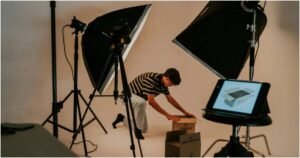
A sturdy tripod is non-negotiable because sharp compositions and HDR bracketing rely on stability. I’d also invest in speedlights or a small strobe kit to learn flash-ambient blending, commonly called Flambient photography inside the industry.
Beyond gear, I would immediately budget for business registration, liability insurance, equipment protection, editing software, and cloud delivery systems.
The photographers who treat this like a real business from the start usually scale much faster.
Learning the Skills That Actually Matter
One thing surprised me while studying successful photographers across the US market. Most agents care more about reliability and turnaround speed than ultra-creative photography styles.
That means technical efficiency becomes incredibly important.
Understanding interior lighting is essential because homes often contain mixed lighting temperatures, dark corners, and bright windows. Learning HDR photography and perspective correction dramatically improves image quality.
Composition also matters more than many beginners realize. Wide-angle photography should make spaces feel open without making rooms appear unrealistic.
Editing speed becomes another major factor. Realtors often expect next-day delivery, especially in competitive housing markets.
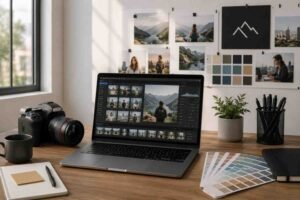
I would focus heavily on Lightroom workflows, Photoshop perspective correction, HDR merging, and AI-powered real estate editing tools to reduce turnaround time.
How I’d Build a Portfolio Without Clients
Most beginners get stuck here, but building an initial portfolio is easier than people think.
I would photograph my own home first. After that, I’d ask friends, Airbnb hosts, or local property owners if I could shoot renovated spaces for practice.
The goal is creating at least ten polished sample galleries showing consistency across interiors, exteriors, kitchens, bathrooms, and twilight scenes.
I’d also include drone images because aerial photography instantly increases perceived professionalism.
A clean portfolio website would become a top priority immediately afterward. Agents want to see pricing, turnaround times, sample galleries, and contact information without digging through social media pages.
How Pricing Works in the US Market
Pricing is where many new photographers damage their long-term growth.
Charging too little often attracts difficult clients while making the business financially unsustainable. Instead, I would structure pricing around property size and bundled services.
Smaller homes under 3,000 square feet often range from roughly $125 to $179 for standard HDR photography packages. Larger luxury homes frequently exceed $300 or $400 depending on complexity and location.
Premium listings often rely on luxury real estate photography to create a stronger first impression and justify higher property value.
Virtual tours, interactive floor plans, and cinematic walkthrough videos increase revenue even further. Full video packages can easily exceed $400 per property in competitive metro areas.
The most profitable photographers rarely rely on photos alone. They position themselves as complete real estate media providers.
The Fastest Way I’d Get Realtor Clients
If I had to restart today, I would focus aggressively on local outreach and local SEO.
I’d optimize a Google Business Profile using highly targeted search phrases connected to my city and surrounding suburbs. Realtors usually search locally when hiring photographers, so appearing in map results matters enormously.
I would also study local property listings daily. Whenever I found agents using poor-quality smartphone photos, I’d send a personalized email introducing my services and offering a discounted first shoot.
That strategy works because many agents already know their current listing photos and real estate drone photography content look weak.
Networking would become another major focus. Attending open houses, real estate meetups, broker events, and local realtor association gatherings creates direct face-to-face trust much faster than cold advertising alone.
Relationship-building drives this industry.
Why Drone and Video Services Increase Revenue So Fast
Traditional listing photography remains important, but the fastest-growing businesses now offer multiple media formats under one brand.
Short-form property videos perform extremely well on Instagram Reels, TikTok, YouTube Shorts, and Facebook marketing campaigns. Realtors increasingly want social-first media content because buyers spend so much time scrolling mobile platforms.
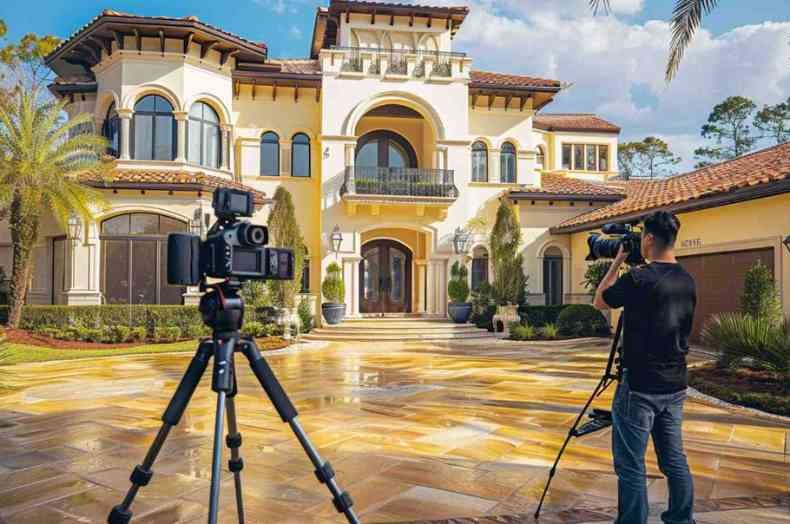
Drone photography also dramatically improves luxury listings, waterfront properties, farms, large suburban homes, and commercial real estate.
Adding aerial services creates stronger pricing power while helping photographers stand out in crowded markets.
This is where a modern real estate photography business separates itself from photographers still offering only standard listing photos.
The Operational Systems I’d Build Early
The photographers earning the most money usually operate with systems instead of chaos.
I would automate booking confirmations, invoicing, image delivery, and client reminders as early as possible. White-label delivery galleries and branded client portals help create a more professional experience while saving time.
Fast delivery matters because agents often need media uploaded to MLS systems immediately.
I’d also outsource editing once booking volume increased consistently. Many successful photographers spend more time managing clients and shooting homes than editing images themselves.
That shift transforms a solo operation into a scalable media company.
Mistakes That Hurt Most Beginners
Overediting remains one of the biggest problems in property photography. Unrealistic HDR effects, oversaturated skies, and unnatural colors often make homes look fake.
Another major issue is inconsistent communication. Realtors work under tight timelines, so slow replies and missed deadlines destroy trust quickly.
I also see beginners ignore contracts, licensing agreements, and insurance protection. Even small businesses need clear payment policies and liability coverage.
The photographers who survive long-term usually prioritize professionalism as much as image quality.
How I’d Scale Beyond Solo Photography

Once consistent bookings started coming in, I would focus heavily on recurring relationships and service expansion.
Adding virtual staging, 3D tours, social media reels, branded agent videos, and floor plans would increase average order value significantly.
At that stage, growth becomes less about photography skills and more about operational efficiency, client retention, and local market dominance.
That is how many media companies eventually grow from one camera operator into full production teams serving multiple cities.
A scalable real estate photography business is ultimately built on reliability, speed, and repeat realtor partnerships rather than artistic experimentation alone.
Frequently Asked Questions (FAQs)
1.How profitable is a real estate photography company in the US?
Many photographers earn between $60,000 and $80,000 annually, while larger operations with recurring realtor partnerships can exceed six figures.
2.Do I need a license for drone real estate photography?
Yes. Commercial drone work in the United States generally requires an FAA Part 107 certification.
3.What camera lens is best for property photography?
Most professionals prefer a 16–35mm wide-angle lens because it captures interiors naturally without excessive distortion.
4.How long does it take to edit real estate photos?
Most experienced photographers can edit a standard property gallery within one to three hours depending on complexity and workflow automation.
5.Is real estate photography hard to learn?
The fundamentals are learnable fairly quickly, but mastering lighting, composition, editing speed, and client management takes consistent practice.
Why I Believe This Industry Still Has Huge Opportunity
Even with growing competition, I still believe the opportunity remains enormous because most agents desperately need reliable media partners they can trust repeatedly.
The photographers winning today are not necessarily the most artistic. They are the ones building systems, delivering quickly, communicating professionally, and helping agents market homes more effectively.
That combination creates repeat income, stronger referrals, and long-term business stability.
In my opinion, the future belongs to photographers who combine traditional property photography with drone media, short-form video content, automation systems, and local relationship marketing.
That is what transforms a small startup into a sustainable real estate photography business capable of thriving for years.