When I first learned photography, I thought buying a longer lens would magically make my photos look more cinematic. Then I realized the real secret was not only the lens. It was where I stood. That changed how I shot portraits, travel scenes, sports, wildlife, and even street photos.
Camera Lens Compression Explained simply means understanding why distant backgrounds can look closer, larger, and more dramatic when you shoot from farther away with a longer focal length. It is one of those photography ideas that sounds technical at first, but once you see it in action, it becomes very easy to use.
What Is Lens Compression in Photography?
Lens compression is the visual effect where the background appears closer to the subject than it actually is. Mountains may look huge behind a person. Buildings may seem stacked together on a city street. A sunset may look bigger behind a couple.
Many beginners think the lens itself “compresses” the scene. The better way to understand it is this: compression happens because of camera distance. A telephoto lens helps because it lets you stand farther away while still keeping your subject large in the frame.
The Big Myth About Focal Length
A 200mm lens does not physically pull the background forward. What changes the look is your shooting position. If you stand close to your subject with a wide lens, the foreground looks larger and the background looks smaller. If you step far back and zoom in, the distance between subject and background looks flatter. That flatter look is what photographers call compression.
Wide-Angle vs Telephoto Look
A wide-angle lens makes spaces feel deep, open, and stretched. This is why it works well for interiors, landscapes, and action scenes where you want energy.
A telephoto lens makes space feel tighter and more layered. This is why portrait photographers often use 85mm, 135mm, or 200mm lenses. These focal lengths can make faces look more natural while giving the background a bigger, smoother presence.
Lens Compression by Focal Length
24mm Lens
A 24mm lens shows a wide view. It exaggerates distance and makes close subjects look bigger. It can work for travel, architecture, and environmental portraits, but it may distort faces if you stand too close.
50mm Lens
85mm Lens
An 85mm lens is a classic portrait choice. It gives a flattering subject shape, soft background separation, and enough compression to make photos feel polished.
135mm Lens
A 135mm lens creates stronger background compression. It is excellent for outdoor portraits, fashion images, and sports sidelines where you want the background to feel closer.
200mm Lens
A 200mm lens gives a dramatic compressed look. It works beautifully for wildlife, sports, landscapes, and portraits where you want mountains, trees, or city lights to appear large behind the subject.
How to Create Lens Compression
The process is simple. Move farther away from your subject, use a longer focal length, and keep some distance between your subject and the background.
For example, if you are photographing someone in front of trees, do not stand two feet away with a wide lens. Step back, zoom in, and frame them tightly. The trees will appear larger and closer behind them. This is the easiest way to turn a plain background into something more cinematic.
How to Use It for Portraits

For portraits, compression helps faces look more natural. Wide lenses can make noses, foreheads, or hands look larger if the camera is too close. Longer lenses reduce that distortion because you are shooting from farther away.
I like using this technique when I want clean headshots, outdoor senior portraits, engagement photos, or fashion-style images. It helps the subject stand out without making the background look empty.
How to Use It for Landscapes and Travel
Lens compression is not only for portraits. In travel photography, it can make mountains look massive behind a person, make city streets look layered, or make the moon appear larger near a skyline.
For landscapes, try shooting from far away with a telephoto lens instead of always reaching for a wide-angle lens. You may find stronger patterns, cleaner layers, and more powerful compositions.
Camera Settings That Help
Use a longer focal length when possible. Start around 85mm for portraits and go longer for stronger background compression. Choose a wider aperture if you want a softer background, such as f/2.8 or f/4.
For landscapes, use a narrower aperture like f/8 to f/11 if you want more detail across the scene. Keep your shutter speed fast enough to avoid blur, especially with longer lenses. A tripod can help when shooting landscapes or low-light scenes.
Common Mistakes Beginners Make
One common mistake is thinking zoom alone creates compression. If you zoom in but stay in the same place, the effect may not be strong. You need to move back. Another mistake is confusing background blur with compression.
Blur is controlled by aperture, focal length, distance, and sensor size. Compression is mainly about perspective. A third mistake is placing the subject too close to the background. If there is no distance behind the subject, the effect will not feel dramatic.
Simple Practice Exercise
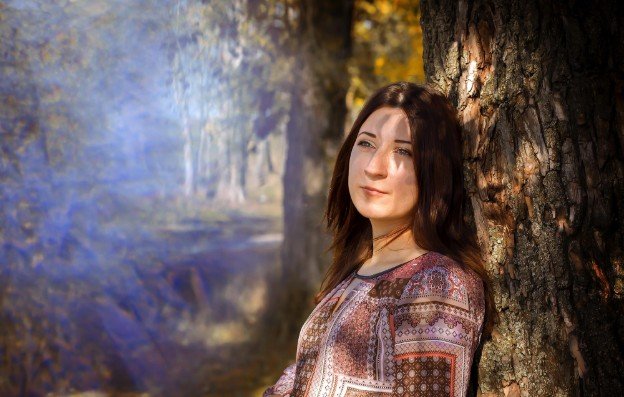
Find a person, tree, sign, or parked car as your subject. Take one photo close up with a wide lens or phone camera. Then step far back and zoom in as much as you can. Keep the subject about the same size in both photos.
Compare the background. In the second image, it should look closer and larger. That simple test will teach you more than reading theory alone.
Frequently Asked Questions
1. What does Camera Lens Compression Explained mean?
It means learning why backgrounds look closer in some photos, especially when the photographer stands farther away and uses a longer focal length.
2. Is lens compression good for portraits?
Yes. It can make faces look more natural, reduce close-up distortion, and make backgrounds look fuller and more professional.
3. Do phone cameras create lens compression?
Yes, but it depends on the phone lens and shooting distance. A phone’s telephoto mode can create a more compressed look than the standard wide camera.
4. Is compression the same as bokeh?
No. Compression changes how distances appear. Bokeh refers to the quality and softness of out-of-focus areas.
Final Thoughts
Once I understood lens compression, my photos stopped looking random. I could decide whether I wanted depth, drama, softness, or a stronger background before pressing the shutter.
The main lesson is simple: do not only think about the lens. Think about where you stand. Step back, zoom in, and watch how the whole scene changes.